
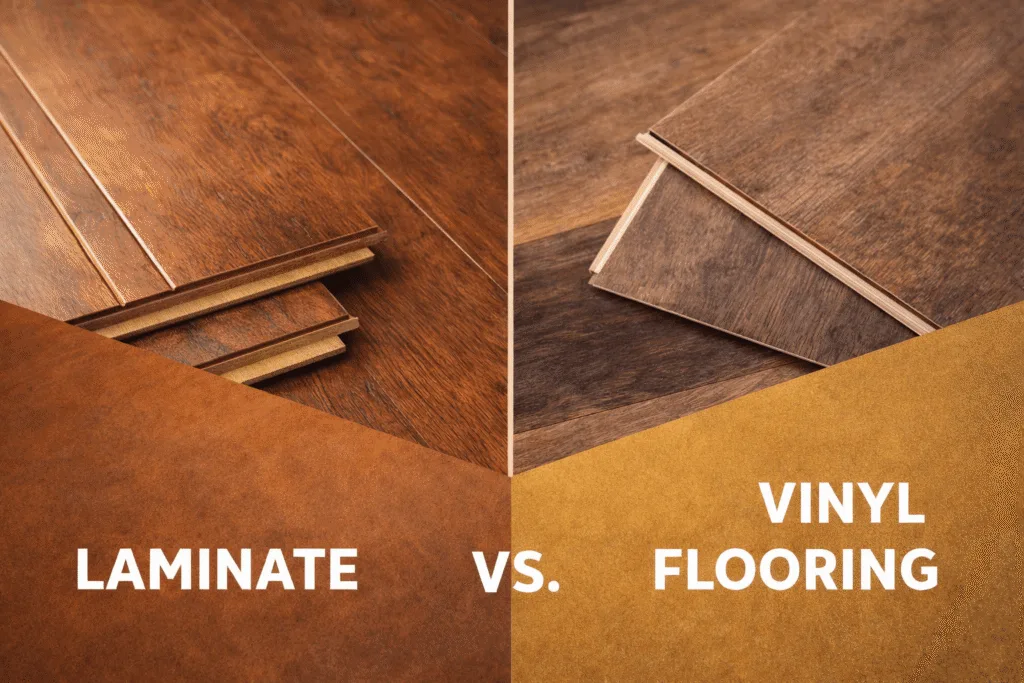
Vinyl and laminate flooring are both incredibly popular, budget-friendly flooring choices that successfully mimic the look of natural wood or stone. However, despite their superficial similarities and comparable pricing, they are constructed using different flooring materials and excel in very different applications.
If you are trying to decide between Luxury vinyl and laminate for your home, here is a detailed comparison to help you choose the option that best fits your needs by one of the most trusted flooring brand.
1. Composition and Construction
The core materials define the performance characteristics of each type of floor:
- Laminate Flooring:
- Composition: Made from multiple layers. The core is high-density fiberboard (HDF), essentially compressed wood product. This core is topped with a photographic image layer and protected by a transparent, wear-resistant layer.
- Key Trait: Because of the wood-based core, it is susceptible to water damage.
- Vinyl Flooring (Luxury Vinyl Plank(LVP)/Luxury Vinyl Tile(LVT)):
- Composition: Primarily synthetic materials, usually PVC (polyvinyl chloride). Modern luxury vinyl products have a rigid, waterproof core (like WPC or SPC) topped with a printed film and a thick wear layer.
- Key Trait: Its synthetic nature makes it inherently waterproof.
2. Water Resistance and Durability
This is the most critical difference between the two materials.
| Feature | Laminate Flooring | Vinyl Flooring (LVP/LVT) |
| Water Resistance flooring | Low. The HDF core absorbs moisture, causing permanent swelling, warping, and damage if water seeps into the seams. | High (Waterproof). The synthetic core is fully impermeable. Ideal for kitchens, bathrooms, and basements. |
| Scratch Resistance | Generally very good due to the tough surface coating. High-quality products often resist surface scratches better than vinyl. | Good, but can be susceptible to deep scratches or gouges if a sharp object pierces the vinyl layer. |
| Maintenance | Easy to clean, but must avoid wet mopping. | Very easy to clean; can be wet-mopped and steam-cleaned (check manufacturer guidance). |
3. Aesthetics and Comfort
- Laminate: Often excels in realism. Because the photo layer is printed directly, it can offer highly detailed, realistic wood grain and textures. It is rigid and relatively hard underfoot.
- Vinyl (LVP/LVT): Has made huge strides in realism. Many options now feature embossed-in-register (EIR) technology, matching the texture to the wood grain photo. It is typically softer, warmer, and quieter underfoot than laminate.
4. Installation and Cost
Both are popular DIY options due to their locking systems.
- Installation: Flooring installation of both primarily use a click-and-lock floating method, which is quick and straightforward. Vinyl is more tolerant of subfloor imperfections.
- Cost: Both flooring products are affordable in Denver. Basic laminate is often the cheapest option per square foot. Luxury Vinyl Plank (LVP) is slightly higher in cost but offers waterproof performance and better long-term durability.
The Final Decision
| Choose Laminate Flooring if: | Choose Vinyl Flooring (LVP/LVT) if: |
| Budget is the top priority and you need a low-cost solution. | Water resistance is mandatory (for kitchens, bathrooms, laundry rooms, or basements). |
| You are installing in a low-moisture area (bedrooms, living rooms). | You need a floor that is softer and quieter underfoot. |
| You prioritize the most realistic wood grain visuals for the lowest price. | You have pets or kids who will test the floor’s stain and moisture resistance. |
Both are excellent resilient floor choices, but make sure to purchase both from reliable flooring shop in Denver and consider that the vinyl’s waterproof core gives it a significant edge in high-risk areas of the home.


