
Choosing carpet for high-traffic zones, like hallways, stairs, and living rooms, requires prioritizing durability and resilience over luxury. A beautiful, plush carpet can quickly look matted and worn down if it’s not constructed to handle heavy foot traffic, pets, and children.
To ensure your carpet investment lasts, you need to focus on three key elements: fiber type, construction, and density.
1. Top Fiber Choices for Durability in Colorado Humidity
The material the carpet is made of is the first line of defense against wear.
- Nylon: Often considered the gold standard of carpet material for high-traffic residential and commercial use. Nylon is incredibly resilient, meaning the fibers bounce back after being compressed (resisting crushing and matting). It is also easy to clean and maintains its color well.
- Triexta (PTT): A newer fiber known for its excellent durability and inherent stain resistance. Unlike some other fibers, its stain resistance is built into the molecular structure, making it highly suitable for areas where spills are common.
- Wool: While durable and incredibly soft, wool is the most expensive option and is more susceptible to permanent staining than nylon or triexta. Wool Carpets are highly resilient but requires more specialized care.
- Fiber to Avoid: Polyester (PET). While inexpensive and soft, it has poor resilience, meaning it tends to mat and flatten quickly in high-traffic areas, making the floor look worn out prematurely.
2. Construction Type: Style Meets Strength
Flooring professionals know that the way the fibres are attached to the backing dictates how well the carpet will resist crushing.
- Loop Pile: Carpets where the fiber ends remain uncut, forming small loops.
- Best Type: Berber (a type of loop pile). Berber carpets are tightly woven with low, dense loops. They are highly durable, resist tracking, and are excellent at concealing seams and wear patterns.
- Cut Pile: Carpets where the loops are cut, creating an upright tuft.
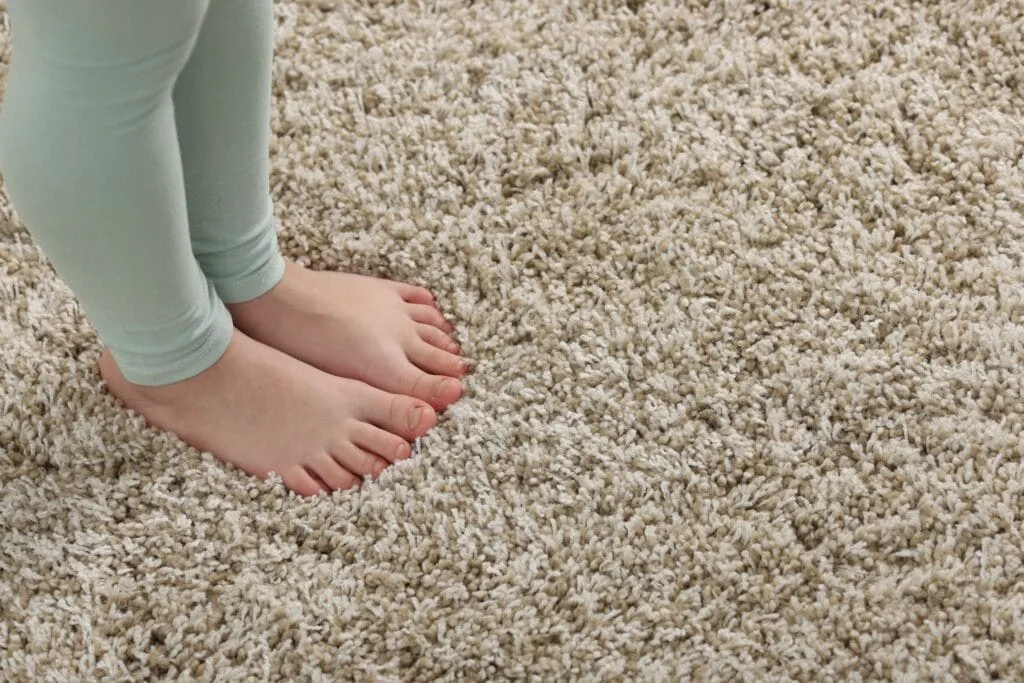
- Best Type: Frieze: This carpet has long, tightly twisted fibers that curl randomly. Frieze carpets, made with high-twist yarn, offer excellent resilience, and the random direction of the fibres helps hide footprints and minor matting.
- Avoid: Plush or Saxony cut piles. These have straight, dense fibers that show every footprint and mat down very quickly in busy areas.
3. Density: The Ultimate Test
Density is perhaps the most important factor in a high-traffic carpet. It refers to how closely packed the fibers are.
- The Pinch Test: To check density, try to bend a carpet sample backward. If you can easily see the carpet backing, the density is low. If the fibers are so tightly packed that you can barely see the backing, the carpet has high density and will perform well in busy areas.
- High Density = High Resilience: High density ensures that when a fiber is compressed (stepped on), the surrounding fibers help hold it upright, preventing matting and extending the carpet’s life.
When shopping for carpet from a reliable flooring shop in Denver for busy areas of your home, prioritize resilient nylon or triexta fibres and choose either a low-profile loop (Berber) or a high-density frieze cut pile.


