

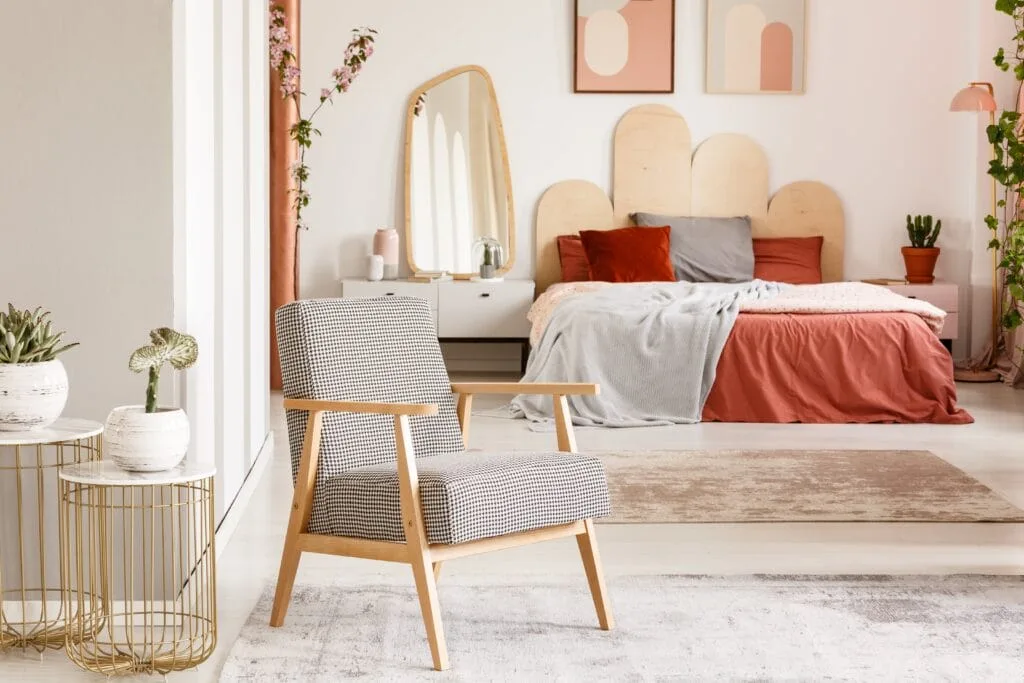
In design, flooring serves a powerful purpose beyond mere utility; it’s a tool for manipulating visual space. If you are dealing with a small room, a tight hallway, or a compact apartment, the right flooring type, color, and installation technique can create an immediate and noticeable illusion of greater size and openness.
By strategically using these six design tricks, you can leverage your floor to reflect more light, stretch the lines of the room, and make any space feel significantly larger than its square footage suggests.
1. Embrace Light Colors to Expand the Space
Color is the most effective tool for influencing perception. Dark colors absorb light, making walls feel closer and spaces feel intimate or small. Light colors do the opposite.
- The Effect: Choosing light colors like pale gray, bleached white oak, cream, or natural light maple causes the floor to reflect light upwards, blurring the line between the wall and the floor. This creates an immediate visual expansion.
- Best Options: Light wood finishes, pale gray laminate, cream-colored large-format tile, or light beige carpet.
- Pro Tip (The Monochromatic Trick): For maximum expansion, choose wall paint and trim colors that are only slightly lighter or darker than the floor color. A soft contrast creates a seamless boundary, making the entire room feel like a single, large volume.
2. Install Planks Parallel to the Longest Wall
The direction in which hardwood, laminate, or luxury vinyl planks are laid is crucial to directing the eye.
- The Effect: Flooring installers often recommend installing planks so they run along the length of the longest sight line in the room. This naturally draws the eye forward, creating a linear illusion that elongates the space and makes the room feel deeper than it actually is.
- The Rule: If you are laying floor across an entire level, consider laying the planks parallel to the main incoming light source (windows), as this also helps mask the seams.
3. Utilize Wider and Longer Planks or Tiles
Counter-intuitively, the size of your floor elements should be big, not small.
- The Effect: Small planks or tiles result in more seams and grout lines. These lines chop up the visual space, causing the eye to stop repeatedly, which emphasizes the small size of the room. Wide and long planks or large-format tiles drastically reduce the number of visible seams.
- Best Options: Planks 5 inches or wider, and rectangular tiles (like 12×24 inches).
- Key Advantage: Fewer visual interruptions create a smoother, more expansive feel, tricking the eye into believing the floor surface is continuous and larger.
4. Choose Less Busy, Simpler Patterns
Flooring patterns can quickly become overwhelming in a confined space.
- The Effect: Highly detailed, multi-colored, or complex patterns can create visual clutter, which makes a small room feel busy and cramped. Choosing a uniform pattern or minimal pattern, usually easy with Denver Carpet & Flooring help, is key to creating a calm, open aesthetic.
- Carpet: Select a dense, neutral-toned carpet with a subtle, solid texture or a tiny multi-fleck pattern (like a simple frieze) rather than large geometric cut-and-loop designs.
- Tile: If using tile floors, opt for minimal or low-contrast grout lines (grout color matching the tile color) to minimize the grid effect.
5. Employ a Consistent Flooring Material
Using the same material throughout adjacent spaces creates a powerful feeling of continuous flow.
- The Effect: Changing flooring materials (e.g., from hardwood in the living room to tile in the kitchen) creates a visual stopping point that defines and emphasizes the boundary between spaces.
- The Solution: For homes with open-concept designs, maintaining the exact same color and material (e.g., continuing Luxury Vinyl Plank from the main living area into the kitchen and entry) creates an uninterrupted visual path, making the entire open space feel expansive and connected.
6. Consider the High-Gloss Finish
The level of sheen on your floor’s surface contributes to the sense of openness.
- The Effect: Floors with a high-gloss finish reflect the ambient and artificial light in the room, mirroring the surrounding space. This upward reflection creates a subtle layering effect, adding depth and luminosity to the room, much like a mirror.
- Best Option: Polyurethane-finished hardwood, polished natural stone, or high-gloss porcelain tiles.
Being a Denver flooring solution provider for over a large time we know that by combining the use of light colors and minimal patterns with the strategic installation of wide, long planks, you can unlock the full potential of any small room, making it feel effortlessly larger and brighter.


