

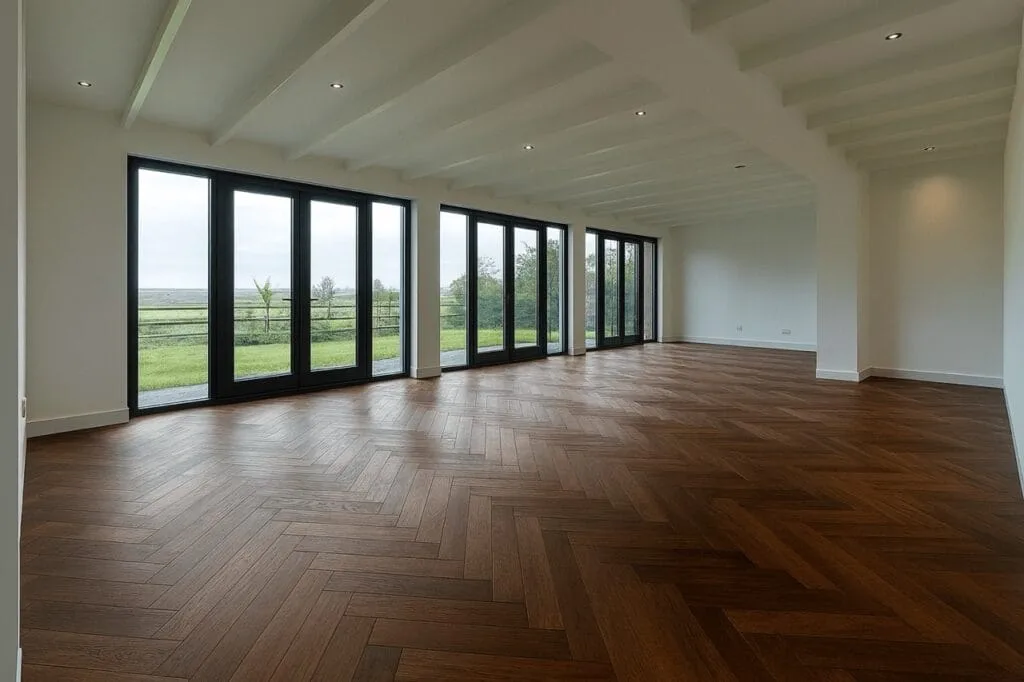
Introduction: The Outdoor Challenge
Outdoor flooring faces the toughest demands: relentless UV exposure, freeze-thaw cycles, heavy rain, dirt, and high foot traffic. Unlike interior floors, exterior materials must be non-porous, fade-resistant, and, most importantly, non-slip when wet. Choosing the right material ensures your patio, deck, or walkway remains beautiful, safe, and low-maintenance for decades.
Here is a breakdown of the top materials specifically engineered to thrive in the most challenging outdoor environments.
1. Porcelain Tile (The Modern Champion)
Porcelain tile, especially when rated for exterior use, is arguably the best all-around modern solution for patios and terraces.
- Pros (Durability & Water): Extremely dense, non-porous, and impervious to water. It is freeze-thaw rated, meaning it won’t crack in cold weather. It’s highly resistant to stains and fading.
- Safety Feature: Look for products with a high R-rating (R11 or higher), ensuring it is non-slip even when wet.
- Aesthetics: Available in an endless variety of designs, including hyper-realistic wood-look planks, stone textures, and contemporary concrete finishes.
- Best For: Patios, pool surrounds, and balconies.
2. Composite Decking (Low-Maintenance Wood Alternative)
Composite decking is a popular alternative to traditional wood, favored for its minimal upkeep requirements.
- Pros (Maintenance): Made from a blend of wood fibers and recycled plastic resins. It is rot-proof, termite-proof, and never requires staining or sealing. Cleaning is simple: soap and water.
- Durability: Resistant to moisture and fading (especially newer generations with protective shells).
- Aesthetics: Offers the warm, classic look of natural wood decking without the associated high maintenance.
- Cons: Can sometimes heat up significantly under direct, intense sunlight.
- Best For: Raised decks and elevated patios.
3. Natural Stone Pavers
Natural stone provides an unparalleled aesthetic of elegance and permanence.
- Pros (Aesthetic & Longevity): Offers unique textures and color variations that add unmatched luxury and property value. When properly cared for, stone can last for centuries. Top choices include Slate, Granite, and Travertine.
- Durability: Extremely durable and resistant to harsh weather.
- Cons (Maintenance): Most stone types are porous and require periodic sealing (often annually) to prevent water penetration and staining. Can be significantly more expensive to purchase and install than tile.
- Best For: Walkways, courtyards, and high-end patios.
4. Concrete and Concrete Pavers
Concrete offers extreme durability, versatility, and cost-effectiveness for large projects.
- Pros (Cost & Strength): Highly durable and affordable for covering large areas.
- Aesthetics (Stamped): Can be stamped, textured, or stained to successfully mimic brick, tile, or even natural stone, offering a custom look at a lower price point.
- Maintenance: Once properly sealed, it resists staining and water penetration.
- Best For: Driveways, large patios, and creating seamless indoor-outdoor transitions (when using the same finish).
Essential Considerations for Any Outdoor Flooring
- Safety First: Always ensure your chosen material has a non-slip or GRIP rating suitable for wet conditions to prevent falls.
- Drainage: Proper installation requires a slope or a drainage system to prevent water from pooling, which can cause structural issues, mildew, and safety hazards.
- UV Stability: Choose materials specifically rated to resist UV rays to prevent premature fading and discoloration, ensuring your floor’s color lasts for years.


