

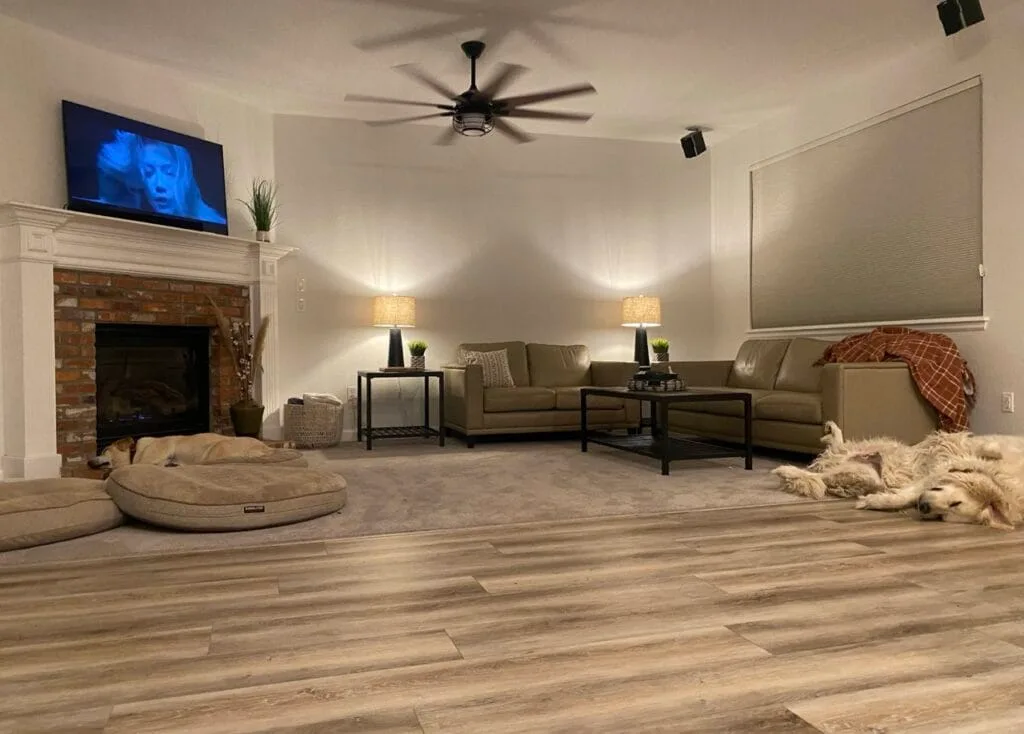
An area rug is one of the most transformative elements in interior design. It can anchor your furniture arrangement, define a space in an open floor plan, introduce colour and texture, and add comfort and warmth to hard surface flooring. However, the wrong size or placement can make a room feel awkward and disconnected. Area rugs are not just accessories. They are foundational design components.
Mastering the use of area rugs involves knowing the key sizing rules and placement strategies for each room in your home. Here is an extensive guide by Denver Carpet & Flooring to correctly incorporating area rugs into your room’s design.
1. The Golden Rule of Sizing: The 2-Foot Guideline
The biggest mistake homeowners make is choosing a rug that is too small for the space. A rug should act as the foundation of your seating arrangement, not merely a decorative postage stamp floating in the middle of the room.
- Anchor the Furniture: In a living room or seating area, the rug should be large enough to anchor the furniture grouping. Ideally, the two front legs of all major pieces of furniture (sofas, chairs, sectionals) should be resting on the rug. This visually connects the pieces and creates a cohesive zone.
- Maintain the Perimeter: For most rooms, aim to leave between 12 to 24 inches of bare floor visible around the perimeter of the rug. This exposed border showcases the beauty of your underlying hard surface (hardwood, LVP, etc.) while allowing the rug to define the room.
2. Room-by-Room Placement Strategies
The ideal rug size changes depending on the function of the space.
| Room | Ideal Sizing Rule | Common Rug Sizes |
| Living Room | All front furniture legs must be on the rug to anchor the seating arrangement. | 8×10 or 9×12 ft (most common), 10×14 ft (large rooms). |
| Dining Room | The rug must extend at least 24 inches beyond all edges of the table. This allows chairs to be pulled out without catching on the rug’s edge. | Based on table size (e.g., 8×10 ft for a 6-person table). |
| Bedroom | The rug should either extend to within a few inches of the nightstands, or the bed should sit entirely on the rug. | 8×10 ft (fits under a Queen bed), 9×12 ft (fits under a King bed). |
| Hallway | Rug runners should be at least 4 inches narrower than the hallway and leave 4-6 inches of space at both the beginning and the end. | Varies in length; typical width is 2 to 3 feet. |
3. Incorporating Color and Pattern
A rug is the best way to inject personality, color, and texture into a neutral room.
- Hard Surface Foundation: If your underlying floor (hardwood or LVP) is a warm, neutral color, you have the freedom to choose any color or pattern for your rug.
- The “Three-Color Rule”: A good starting point is for the rug to contain at least three colors: one that matches a dominant color in the room (e.g., the sofa), one that acts as a neutral (e.g., cream or gray), and one bold accent color that is repeated elsewhere in the room (e.g., a throw pillow or piece of art).
- Layering Texture: If your floor is already carpeted, use a flat-weave or natural fiber rug (like jute or sisal) layered over the wall-to-wall carpet. This adds definition and texture without competing for softness.
4. Maximizing Comfort and Safety
Beyond style, rugs serve essential functional roles, particularly on hard floors.
- Cushioning and Warmth: Rugs provide insulation, warmth, and a soft landing zone in seating areas and bedrooms.
- Protecting Hard Floors: Area rugs protect hardwood or LVP in high-traffic zones (like the immediate front of a sofa) from accelerated wear, friction, and moisture damage.
- Preventing Slips: Always use a non-slip rug pad underneath your area rug, especially on smooth, hard surfaces. This prevents the rug from sliding and wrinkling, which is a significant tripping hazard.
An area rug can completely change how a room feels. It helps anchor your furniture, define spaces in an open layout, add colour and texture, and bring comfort and warmth to hard surface floors. When the rug is the wrong size or the flooring installation is done poorly, the whole room can look awkward and disconnected. Area rugs are not just décor. They are a core part of the design.
Getting it right comes down to a few proven rules. Choose a rug that’s big enough to support the furniture layout, leave a clean border of exposed floor around the edges, and follow room-specific sizing guidelines for living rooms, dining rooms, bedrooms, and hallways. From there, use your rug to tie the room’s colours together, add texture, and improve comfort. Always finish with a quality non-slip rug pad to protect your floors and prevent slipping.
If you want help picking the right area rug size, style, and pad to match your space our Denver Flooring professionals can help you find flooring options that work with your room layout and your existing floors, so it looks intentional and feels great day to day.


