
Introduction: The Legacy of the Amazigh People
Berber carpeting, a term widely used in the modern flooring industry, refers to a style of carpet rooted in the ancient traditions of the Berber people (who call themselves the Amazigh, or “free people”) of North Africa and the Sahara—particularly the Atlas Mountains region of Morocco. Far more than mere floor coverings, the original handcrafted Berber rugs are cultural artifacts, serving as functional necessities and unique artistic expressions of tribal life.
While the mass-produced carpet sold today only mimics the aesthetic, understanding the original craftsmanship reveals why this style remains a favorite for durability and timeless design.
1. Origins and Cultural Significance
The tradition of weaving dates back millennia, shaped by the nomadic lifestyle and the rugged climate of the Atlas Mountains.
- Practical Necessity: Historically, these hand-woven rugs were made from the fleece of local sheep and served multiple purposes for the nomadic tribes: they were used as bedding, blankets, seats, saddles, and heavy protection against the cold nights and dry, harsh environment.
- Symbolism and Storytelling: The geometric patterns, such as diamonds, zigzags, lines, and triangles, are not random decorations. They are ancient symbols passed down through generations of women weavers, representing concepts like protection, fertility, femininity, and nature. Each traditional rug tells a personal story or reflects the history of the tribe that created it.
- The Material: Authentic traditional Berber rugs are almost always made from 100% natural, undyed wool (often creamy white, beige, or brown), giving them a unique texture and rich, soft pile.
2. Characteristics of Modern Berber Carpeting
The term “Berber” in modern mass-market flooring refers to the distinctive construction and look inspired by the original handwoven artifacts.
The Signature Look: Looped Pile
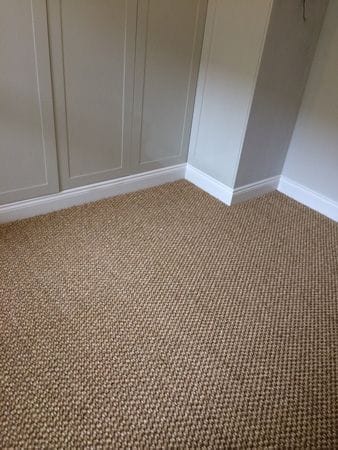
The most defining characteristic of the modern Berber style is its looped pile construction. Unlike cut-pile carpets (which have exposed fiber ends), Berber carpet fibers are woven into tight, dense loops.
- Durability: This looped structure makes the carpet incredibly durable and highly resistant to crushing and matting—two of the main reasons carpets show wear in high-traffic areas.
- Aesthetics: Modern Berber typically features flecks of color on a neutral (often oatmeal or cream) background. This textured appearance is excellent at camouflaging dirt, soil, and footprints.
- Best Use: Its hard-wearing nature makes it an ideal choice for hallways, stairs, basements, and offices—any residential or commercial area with high foot traffic.
3. Fiber Comparison: Natural vs. Synthetic
Modern Berber is available in multiple fibers, each offering a different balance of cost and performance:
| Fiber Type | Composition | Pros | Cons |
| Wool | Natural (Sheep’s Fleece) | Superior natural resilience, luxurious softness, naturally resists dirt and fire. | Higher cost, requires more careful cleaning to avoid damage. |
| Olefin (Polypropylene) | Synthetic | Very affordable, highly resistant to moisture, stains, and fading (solution-dyed). | Poorer resilience; fibers crush and flatten easily under heavy compression. |
| Nylon | Synthetic | Excellent resilience (retains shape better than Olefin), highly durable. | More expensive than Olefin. |
Conclusion
When choosing a Berber carpet for your home, you gain a stylish, durable flooring solution. If you prioritize authenticity and luxury, choose wool. If you need maximum durability and stain resistance in a busy area, a high-quality synthetic (Nylon or Olefin) Berber carpet will deliver the unique texture and performance inspired by its rich North African heritage.