
As we age, home safety becomes a primary concern, and the flooring you choose plays a critical role in preventing falls and ensuring comfort. The best floors for seniors prioritize stability, traction, low impact, and minimal tripping hazards.
When selecting flooring for aging-in-place, you should focus on minimizing the risk of slips and falls while maximizing the ease of movement.
1. Low-Pile Carpeting (The Safety Cushion)
Carpet is the ultimate choice for fall safety due to its inherent cushioning.
- Pros:
- Impact Absorption: In the event of a fall, carpet offers significantly more cushioning than any hard surface, reducing the risk of serious injury.
- Non-Slip: Provides excellent traction, reducing the chance of a slip.
- Warmth: Offers comfort and insulation, which is important for seniors.
- Cons:
- Mobility: Thick, high-pile carpet can make pushing walkers or wheelchairs difficult.
- Tip: Choose low-pile, dense carpet to ensure maximum cushioning while maintaining a smooth surface for mobility aids. Avoid shag or deep piles.
2. Luxury Vinyl Tile or Plank (LVT/LVP)
LVT and LVP have become popular alternatives to slick tile or hard wood due to their versatility and safety features.
- Pros:
- Waterproof and Non-Slip: Vinyl provides superior water resistance (crucial for bathrooms and kitchens) and usually has a slight natural texture that offers better grip than ceramic tile.
- Softness: It is softer underfoot than ceramic or stone, offering greater comfort and slightly better impact absorption.
- Easy Maintenance: The sealed surface is easy to clean, which is convenient.
- Tip: Look for LVT/LVP products with an embossed or textured surface for maximum non-slip performance, especially in wet areas.
3. Cork Flooring (The Natural Choice for Comfort)
Cork is a highly overlooked, senior-friendly option due to its unique cellular structure.
- Pros:
- Cushioning: Cork is naturally spongy and resilient, meaning it compresses slightly underfoot. This makes it comfortable to stand on and significantly dampens the impact of a fall.
- Antimicrobial: It naturally resists mold and mildew.
- Traction: It has a naturally warm, slightly textured surface that offers good grip.
- Cons: It must be sealed to maintain water resistance and can be susceptible to deep scratches if not well maintained.
4. Hard Surfaces (If Necessary)
If a hard surface is necessary, proper mitigation is key:
- Avoid: Highly polished or high-gloss finishes (like glossy tile or polyurethane-finished hardwood) as they are extremely slippery, especially when wet.
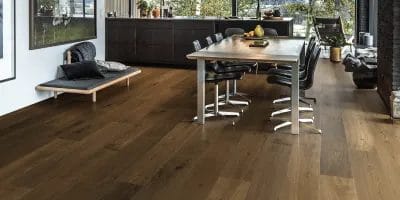
- Choose: Hardwood with a matte or low-sheen finish.
- Choose: Tile with a high Coefficient of Friction (CoF) rating (a measure of slip resistance) and a textured surface.
Critical Safety Considerations
Regardless of the material chosen, always ensure:
- No Level Changes: Eliminate abrupt height transitions between rooms. Use ADA-compliant ramps or transition strips to smooth out any differences.
- No Throw Rugs: Remove small throw rugs, which are a major cause of falls, or secure them completely with non-slip pads or heavy furniture.
- Color Contrast: Use slightly contrasting colors between the floor and the baseboards/walls to aid visibility for those with impaired vision.