

Introduction: Balancing Safety, Moisture, and Design
The bathroom is one of the most demanding environments in your home, requiring flooring that is resilient against constant moisture, safe when wet, and easy to sanitize. Choosing the right tile is essential, as a mistake here can lead to mold, water damage, and costly repairs. Making the best choice requires looking beyond color and focusing on technical ratings and material performance.
Follow this guide to select bathroom tiles like a professional, ensuring a beautiful, safe, and long-lasting result.
1. Material Selection: Porcelain is King for Floors
The material type determines the tile’s performance in wet conditions.
| Tile Type | Key Characteristics | Recommended Use |
| Porcelain | Impervious to Water (absorbs <0.5% water). Denser, harder, and more durable than ceramic. | Mandatory for Shower Floors and Heavy Traffic Floors (high resistance to chips and wear). |
| Ceramic | More porous and lighter. Easier to cut and more affordable. | Ideal for Walls and Backsplashes (where low traffic and ease of cutting are priorities). |
| Natural Stone | Luxurious and timeless (marble, slate). Requires regular sealing to prevent water absorption and staining. | Feature walls, vanities, or large primary bathroom floors (avoid unsealed stone in showers). |
2. Prioritize Safety: The Slip-Resistance Factor
Standard glossy tiles become dangerously slippery when wet. Safety is crucial, especially in shower areas and for households with children or seniors.
- Look for Slip Ratings: Inquire about the Coefficient of Friction (COF) or R-rating. For bathroom floors, aim for an R10 or higher. For the shower floor, R11 or C3 (maximum grip) is recommended.
- Finish Matters: Always choose a matte, textured, or honed finish for the floor. Avoid polished or glossy surfaces on any floor area exposed to water.
- Mosaic Strategy: Use small-format tiles (mosaics) on the shower floor. The large number of grout lines acts as natural traction points, providing essential grip and making it easier to slope the floor toward the drain.
3. Aesthetic and Scale Decisions
The size and color of your tile choice will drastically affect the perceived size and mood of your bathroom.
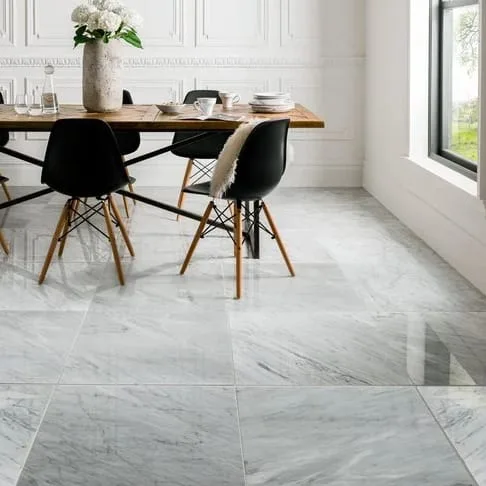
- Large Format Tiles: Using larger tiles (e.g., 12×24 inches or larger) on the floor and walls is a popular modern trend. This technique minimizes grout lines, which reduces visual clutter and makes a small bathroom feel more expansive and seamless.
- Color Strategy:
- Small Bathrooms: Use light colors (white, light gray, pale beige) to reflect light, making the space feel larger and airier.
- Dramatic Effect: Use darker colors (charcoal, navy, emerald green) on the floor or a single accent wall to create depth and sophistication.
- Mix and Match: Mix textures and finishes for a high-end look: pair a matte floor with a glossy wall tile, or use a patterned mosaic on the shower wall and simple, solid tiles elsewhere.
4. Key Maintenance and Installation Considerations
- Grout Sealing: Grout is porous and will stain and absorb moisture over time, leading to mold. Always seal cement-based grout upon installation and re-seal it annually to maintain a hygienic barrier. (Epoxy grout is a non-porous alternative that requires no sealing.)
- Comfort Solution: Tile is inherently hard and cold. For supreme comfort, install radiant floor heating beneath the tile. Tile is a perfect material for this, as its thermal mass retains and radiates heat efficiently.
- Professional Installation: Proper subfloor preparation, waterproofing (using a membrane like Schluter), and accurate sloping are non-negotiable in a wet environment. A professional installer ensures the system is watertight and built to last.
By focusing on porcelain for floors, matte finishes for safety, and mindful design, you can ensure your tile project is a beautiful and durable success.


