
Introduction: The New Bathroom Standard
The modern bathroom is a sanctuary—a place where design meets high functionality. Choosing the right flooring is a critical decision, as the material must be 100% waterproof, safe (non-slip), and durable enough to withstand constant humidity and moisture. Current trends focus on balancing the clean, seamless aesthetic of a spa retreat with essential long-term performance.
Here are the top flooring options and design strategies trending in 2025 for bathrooms, ensuring your space is beautiful, safe, and built to last.
1. Top Material Contenders
The best materials for bathroom floors are those that resist moisture absorption entirely.
A. Porcelain Tile (The Durability King)
- Aesthetic Trends: Dominated by large-format tiles (12×24 inches or larger) and realistic looks mimicking marble (Carrara, Calacatta), slate, or contemporary concrete.
- Pros: Impervious to water (absorbs $<0.5\%$), extremely hard, scratch-proof, and fire-resistant. Excellent for showers and has the highest longevity (50+ years).
- Cons: Hard and cold underfoot. Requires sealing the porous grout lines (the tile’s only weak spot).
B. Luxury Vinyl Tile (LVT) and Plank (LVP)
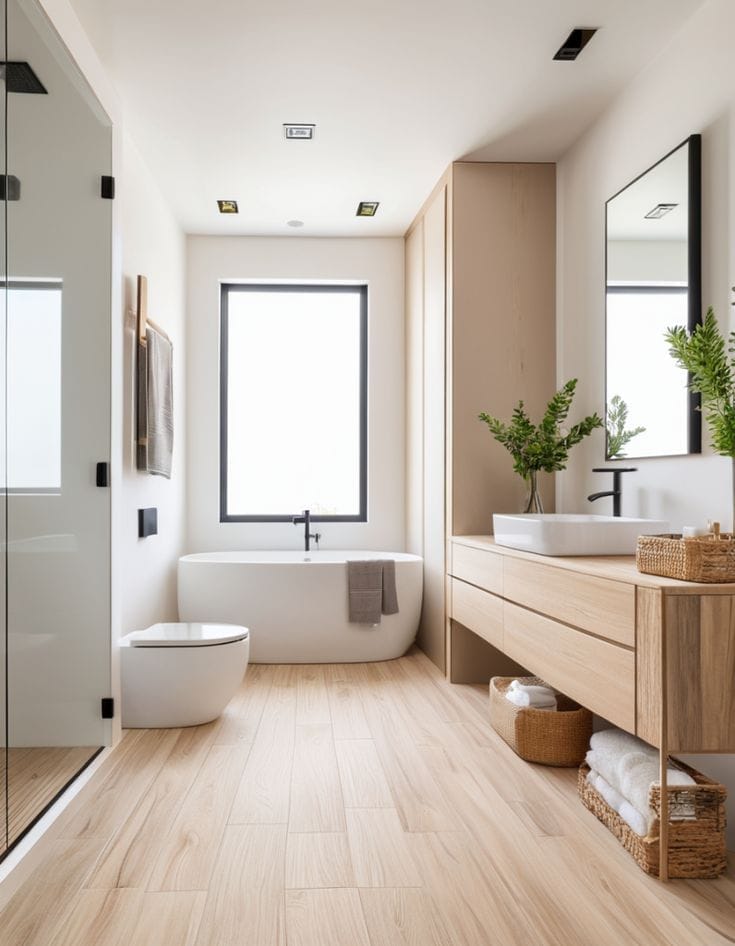
- Aesthetic Trends: Wood-look planks (LVP) for a warm, inviting feel, or stone/geometric tile patterns (LVT) for a stylish, grout-free tile look.
- Pros: 100% Waterproof (especially rigid core SPC). Softer, warmer, and quieter underfoot than ceramic or porcelain. Highly durable wear layer resists scratches and dents.
- Cons: Can be more expensive than basic ceramic. Lower-quality options may show visible seams if installed incorrectly.
C. Waterproof Laminate
- Aesthetic Trends: Realistic wood grain planks in light and mid-tone finishes.
- Pros: Highly affordable and easy to install (DIY-friendly). New products feature a waterproof core and sealed edges.
- Cons: Not as resilient against standing water as LVP or tile; requires prompt cleanup of spills.
2. Design Strategies and Safety (Must-Haves)
Modern bathrooms prioritize safety and a seamless aesthetic that requires attention to detail.
- Non-Slip Finish (Safety First): Always choose tiles with a matte or textured finish for the floor. Avoid polished or glossy finishes, as they become dangerously slippery when wet. Look for tiles with a designated slip-resistance rating (R-rating or C-rating).
- Mosaic in the Shower: Small-format tiles (like penny rounds or mosaics) are ideal for the shower floor. The higher number of grout lines provides essential natural traction and grip, significantly reducing the risk of slipping.
- Minimal Grout (Seamless Look): Use large-format or rectified tiles (tiles with precisely cut, straight edges) on the main floor and walls. This allows for narrower grout lines (as thin as 1/16″), creating the coveted seamless, minimalist, spa-like aesthetic that makes the space feel bigger.
- Continuous Design: A popular trend is using the same floor tile (or a coordinating version) to wrap the shower walls and even the tub surround, eliminating visual breaks and making the room feel larger.
3. The Comfort Upgrade: Radiant Heating
For those in colder climates, the solution to cold tile is to install radiant floor heating (UFH).
- Function: UFH systems (electric cables or water tubes) are placed under the tile. The tile’s high thermal mass absorbs the heat and radiates it gently and evenly throughout the floor, keeping the surface luxuriously warm and cozy year-round.
- Cost/Benefit: While an added cost upfront, heated floors enhance daily comfort and are highly sought after by home buyers.
Final Recommendation: For maximum safety and longevity, Porcelain Tile is the gold standard for the bathroom floor. If you seek a warmer, softer surface with 100% waterproofing and easier installation, Luxury Vinyl Tile (LVT) is the superior alternative.