

Introduction: The Modern Evolution of Wood Flooring
Engineered wood flooring has emerged as the most versatile and functional product in the wood flooring category. It solves the major weaknesses of traditional solid hardwood—namely, its susceptibility to moisture and humidity changes—while preserving the authentic beauty and warmth of real wood.
Choosing the right wood floor requires evaluating your home’s environment (like basements or kitchens) against the material’s structural limitations. For many modern homes, engineered wood is the best choice because it offers the perfect balance of durability, stability, and aesthetic appeal.
1. Understanding Engineered Wood Construction
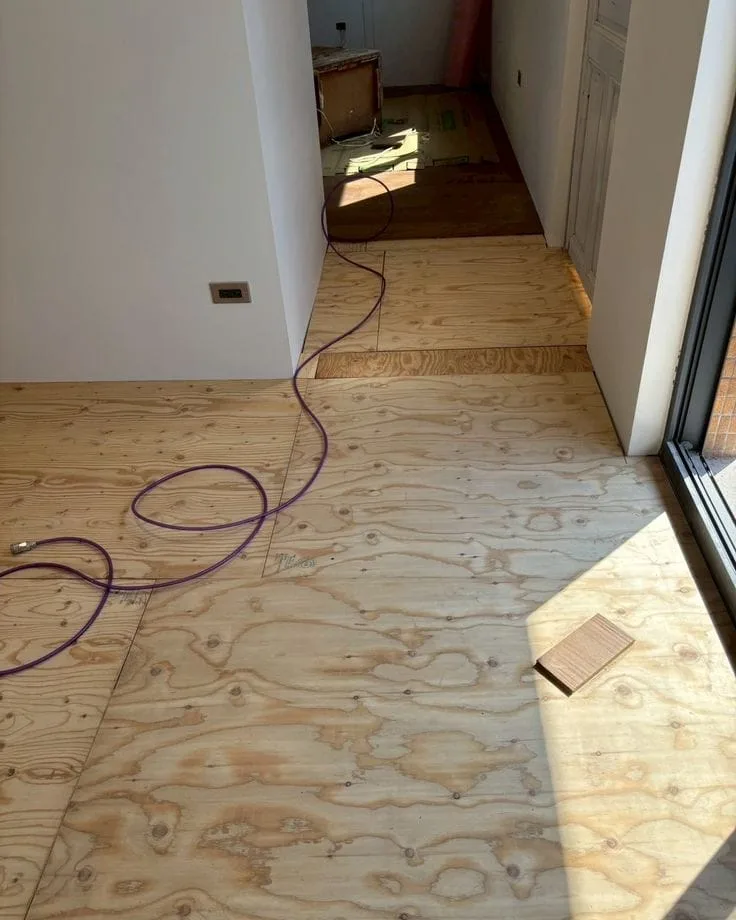
Engineered wood is designed like a high-performance, cross-layered plywood, giving it its superior stability.
- The Wear Layer (Top): This is a thin veneer (slice) of real hardwood (Oak, Maple, Hickory, etc.). This layer determines the floor’s species, color, and ability to be refinished.
- The Core (Middle): Consists of multiple layers of plywood or high-density fiberboard (HDF) adhered together with the grain running perpendicular in each layer.
- The Advantage: This cross-layered structure counteracts wood’s natural tendency to expand and contract due to humidity, making engineered wood dimensionally stable in volatile environments.
2. Key Advantages Over Solid Hardwood
For most modern applications, engineered wood simply performs better and offers more flexibility than solid hardwood.
| Advantage | Benefit to the Homeowner |
| Stability in Humidity | Resists warping, gapping, and cupping better than solid wood, making it safer for fluctuating climates. |
| Installation Versatility | Can be installed in basements (below grade), over concrete slabs, and over radiant floor heating systems—areas where solid wood fails. |
| Aesthetic Versatility | Available in wider, more stable planks (up to 10+ inches wide) without the high risk of cupping. |
| Cost-Effectiveness | Often more affordable than solid hardwood, though prices vary depending on the veneer thickness and core quality. |
3. The Major Limitation: Refinishing Potential
The main trade-off for enhanced stability is limited refinishing potential.
- Refinishing is Limited: Unlike solid hardwood, which can be sanded and refinished multiple times over 50 years, the engineered floor’s real wood top layer is finite.
- Veneer Thickness is Key:
- Thin Veneer (1–2mm): Cannot be sanded; the floor must be replaced if the finish wears through.
- Thick Veneer (3mm+): Can be sanded and refinished 1 to 3 times, significantly extending its lifespan (often 20–40 years total).
- Durability Note: Although more stable than solid wood, it is not waterproof. Spills and moisture must be cleaned immediately to prevent the wood veneer or core from absorbing water.
4. Final Verdict: Is it the Best Choice?
Engineered wood is the superior choice for a majority of residential installations due to its stability and compatibility with concrete slabs and radiant heat.
| Choose Engineered Wood If… | Choose Solid Hardwood If… |
| You are installing in a basement, over concrete, or with radiant heat. | You prioritize unlimited refinishing potential and maximum lifespan (100+ years). |
| You want wide planks or custom species with maximum stability. | Your installation is above grade and you are committed to maintaining consistent humidity levels. |
Engineered wood offers the aesthetic quality of real wood with the functional durability necessary for the challenges of modern home construction and climate fluctuations.


